
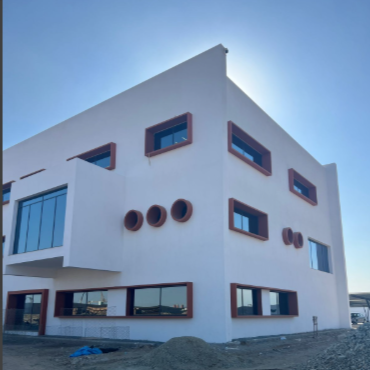
Project Overview
This project achieved LEED Platinum Certification under the LEED v4 BD+C: New Construction Rating System, earning 80 out of 110 points. The certified project demonstrates a high level of performance across energy efficiency, water conservation, sustainable site development, materials and resources, indoor environmental quality, transportation, innovation, and regional sustainability priorities.
Key sustainability strategies included high-performing whole-building energy simulation, renewable energy generation, advanced energy metering, water-efficient design, building-level water metering, construction waste diversion, building life-cycle impact reduction, low-emitting materials, enhanced indoor air quality strategies, daylight optimization, sustainable transportation measures, and innovative green-building strategies.
Project Details
| Rating System | LEED v4 BD+C: New Construction |
| Certification Level | LEED Platinum |
| Overall Rating | 80 / 110 points |
| Focus Areas | Energy Efficiency, Renewable Energy, Water Conservation, Sustainable Site Development, Construction Waste Management, Building Life-Cycle Impact Reduction, Indoor Environmental Quality, Sustainable Transportation, Innovation |
Sustainability Highlights
| Criteria | Achievement |
| Energy Performance | Achieved 93.2% energy cost savings through whole-building energy simulation under the final review. The report also documents predicted annual electricity consumption of 22,935 kWh/year. |
| Renewable Energy | Achieved 88.1% renewable energy performance under the final Renewable Energy Production review. |
| Green Power & Carbon Offsets | Achieved the documented requirements for Green Power and Carbon Offsets, supporting the project’s renewable energy and carbon-management strategy. |
| Outdoor Water Conservation | Achieved Outdoor Water Use Reduction using a no-irrigation-required strategy. |
| Water Metering | Implemented building-level water metering and water metering to support monitoring and management of building water consumption. |
| Construction Waste Management | Achieved 100% diversion of on-site generated construction waste from landfill, as documented in the LEED submission and awarded under the final review. |
| Building Life-Cycle Impact Reduction | Achieved the Building Life-Cycle Impact Reduction requirement through building and material reuse, maintaining existing structural elements. |
| Environmental Product Declarations | The documentation demonstrated qualifying environmental product declarations for products sourced from at least five manufacturers, with the final review awarding the EPD credit. |
| Low-Emitting Materials | Achieved the Low-Emitting Materials requirements across product categories including flooring, ceilings, and insulation, with the final review awarding the full three-credit achievement. |
| Enhanced Indoor Air Quality | Achieved Enhanced Indoor Air Quality Strategies through increased ventilation, supporting improved indoor environmental quality. |
| Daylight | Achieved the full documented Daylight requirement through Option 3: Measurement, demonstrating daylight performance through on-site measurement. |
| Sustainable Transportation | Achieved access to quality transit, bicycle facilities, reduced parking footprint, and green-vehicle measures. The project also documented 66.67% reduced parking footprint for exemplary performance. |
| Innovation | Achieved five Innovation credits, including documented strategies such as Green Building Education, Pilot Credit–Daylight in Nonregularly Occupied Spaces, Heat Island Mitigation with Cool Walls, and exemplary renewable-energy performance. |
| Regional Priority | Achieved all four documented Regional Priority achievements associated with Heat Island Reduction, Outdoor Water Use Reduction, Indoor Water Use Reduction, and Optimize Energy Performance. |